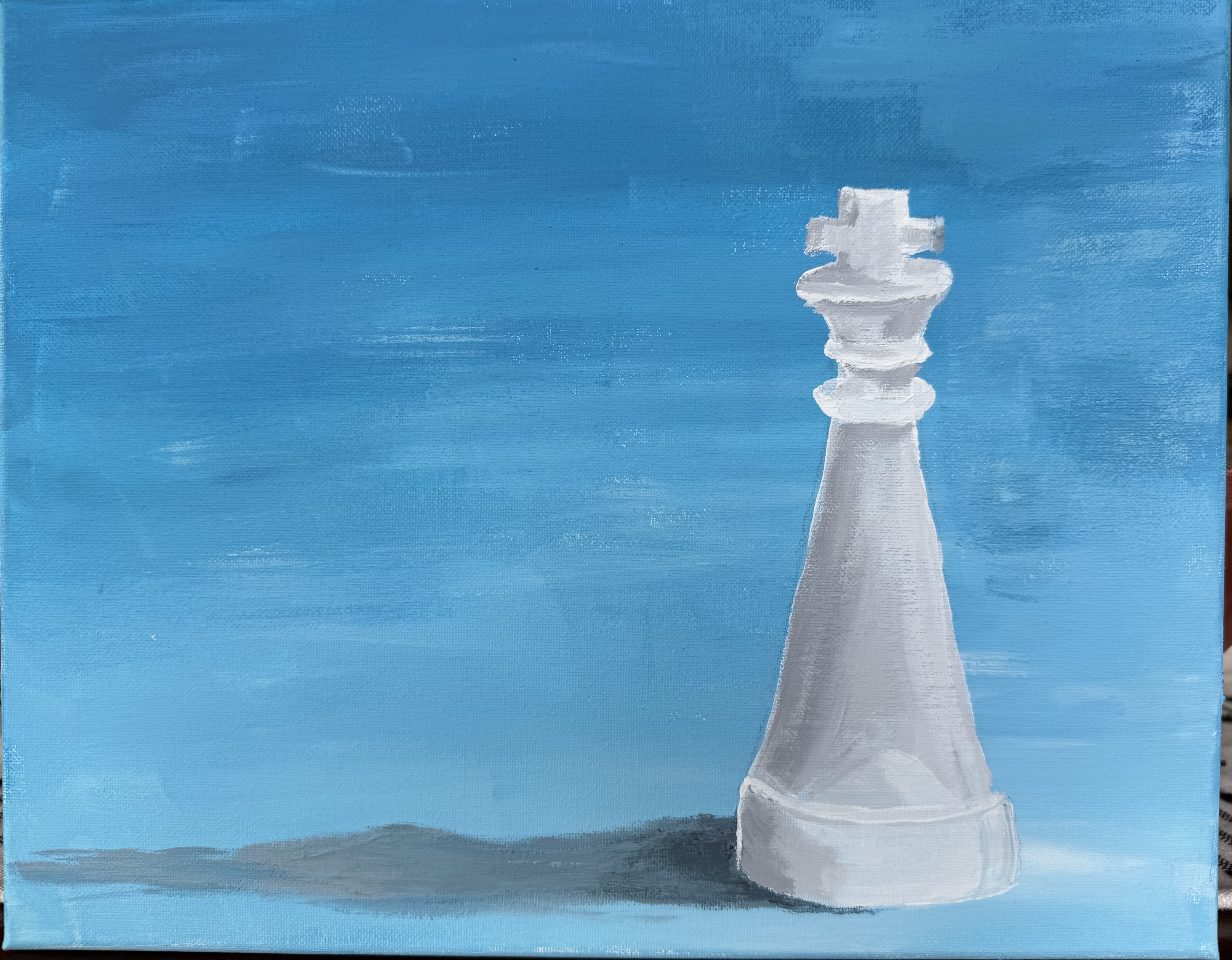
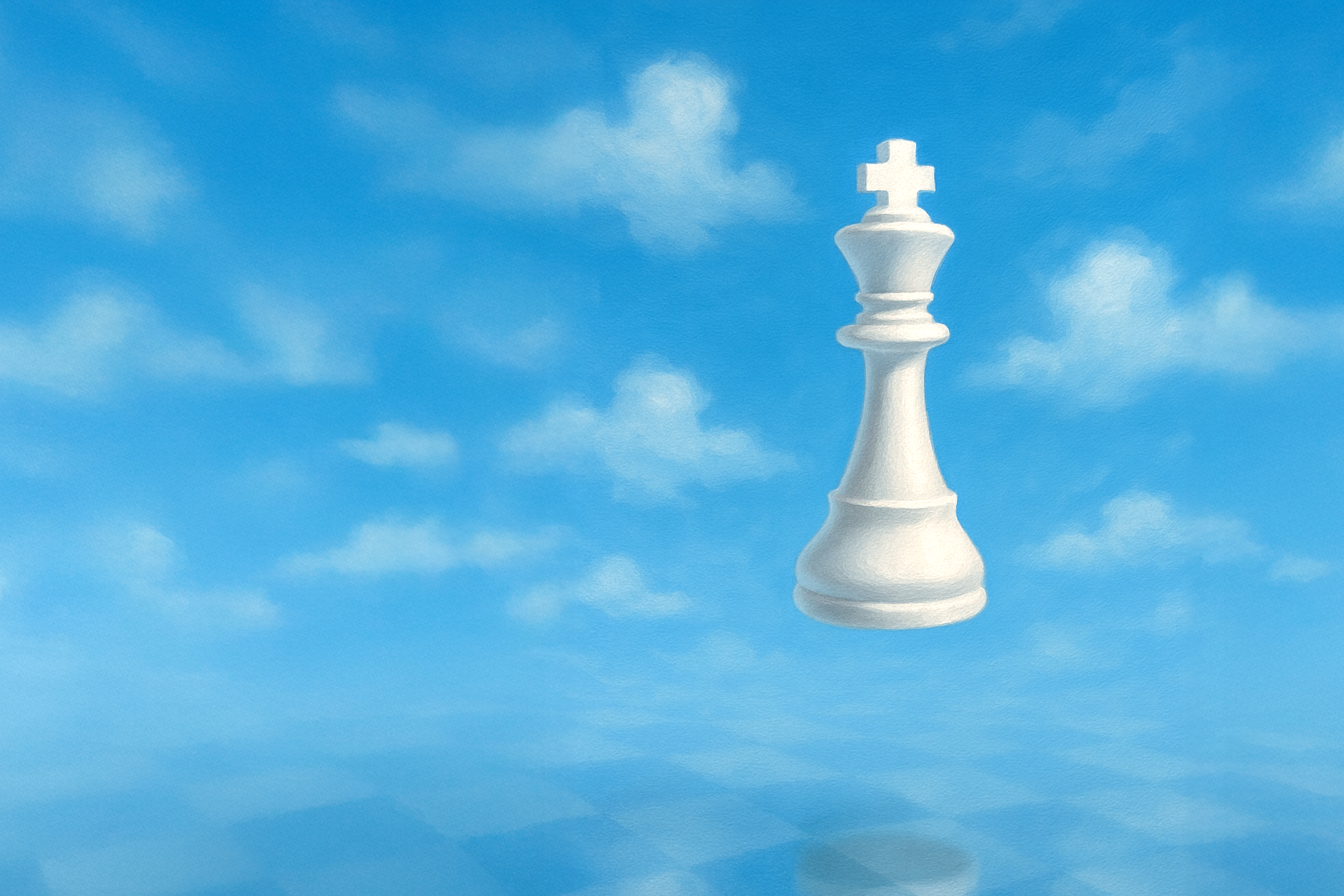
A lone king rises, weightless above the board. Not victory, not defeat
— but a release beyond the game itself.
In the final class, when the vote came down to still life, I braced myself for another round of polite arrangements. But something in me resisted. From the objects on offer, I chose the chess piece. Maybe it was strategy, maybe simplicity, maybe just rebellion against fruit in a bowl.
I broke the rules, leaving out the horizon line, denying the board itself. What emerged was strange and a little haunting: a lone white king adrift, its shadow the only tether to reality. What should have been traditional slipped toward the surreal — a piece suspended between gravity and release, the tangible and the symbolic.
In the end, the painting became less about the game and more about transcendence. Victory wasn’t framed by conquest or defeat, but by the act of rising beyond the board entirely. And maybe that’s what Paint to Possibility has been all along — a way of breaking rules, of carrying a work from one medium to another until it revealed something more. Endgame wasn’t just the closing move; it was the moment when play gave way to possibility itself.
Here, reality falls away — and possibility ascends.

